How modern do you think modern business is?
Obviously, there are aspects of modern business that would have been unthinkable in the past. Fifty years ago, computers were only used by the largest organisations, and that only for what we’d see as a laughably limited range of tasks. Twenty years ago, the idea of small business owners routinely having their meetings in front of a screen would have seemed like science fiction.
Those are important changes — but, in most respects, the ways we do business haven’t changed much since business began. And that was a long time ago. There’s evidence of formal trade long before our ancestors settled down and started building homes.
At the very least, business has been getting done in ways we’d broadly recognise since classical times. People have traded goods or services for money, raising capital for their ventures from their own funds, by borrowing in return for sureties or by selling shares in the business. They’ve found ways of building their reputation and nurturing good relationships with customers. Just like us.
And some very specific aspects of business go back further than you might think. All the way to the middle ages.
The Chairman of the Board
Whether you lived in a palace, a castle or a more modest manor house, the whole household would eat together in the great hall, at a table consisting of a long board laid on top of trestles. Most of the household would sit on benches along the sides, but there’d be one chair at the top for the master of the house (or occasionally a guest of honour, such as if the king were visiting) who would thus be the chairman of the board.
The hall and the board weren’t only used for eating, however. Work of various kinds would go on there during the day, and any important meetings would be held at the board — such as a business venture for which the master of the house was the senior investor, and would therefore be sitting in the chair.
In time, of course, it all became more formalised. Instead of using someone’s dining hall, the meeting room would be in a building dedicated to the business. The table became a more solid piece of furniture, and everyone had chairs. But the old terminology survived, and to this day those people continue to be the Board, headed by a Chairman, Chairwomen, or just Chair.
Are You Really a Mercenary?
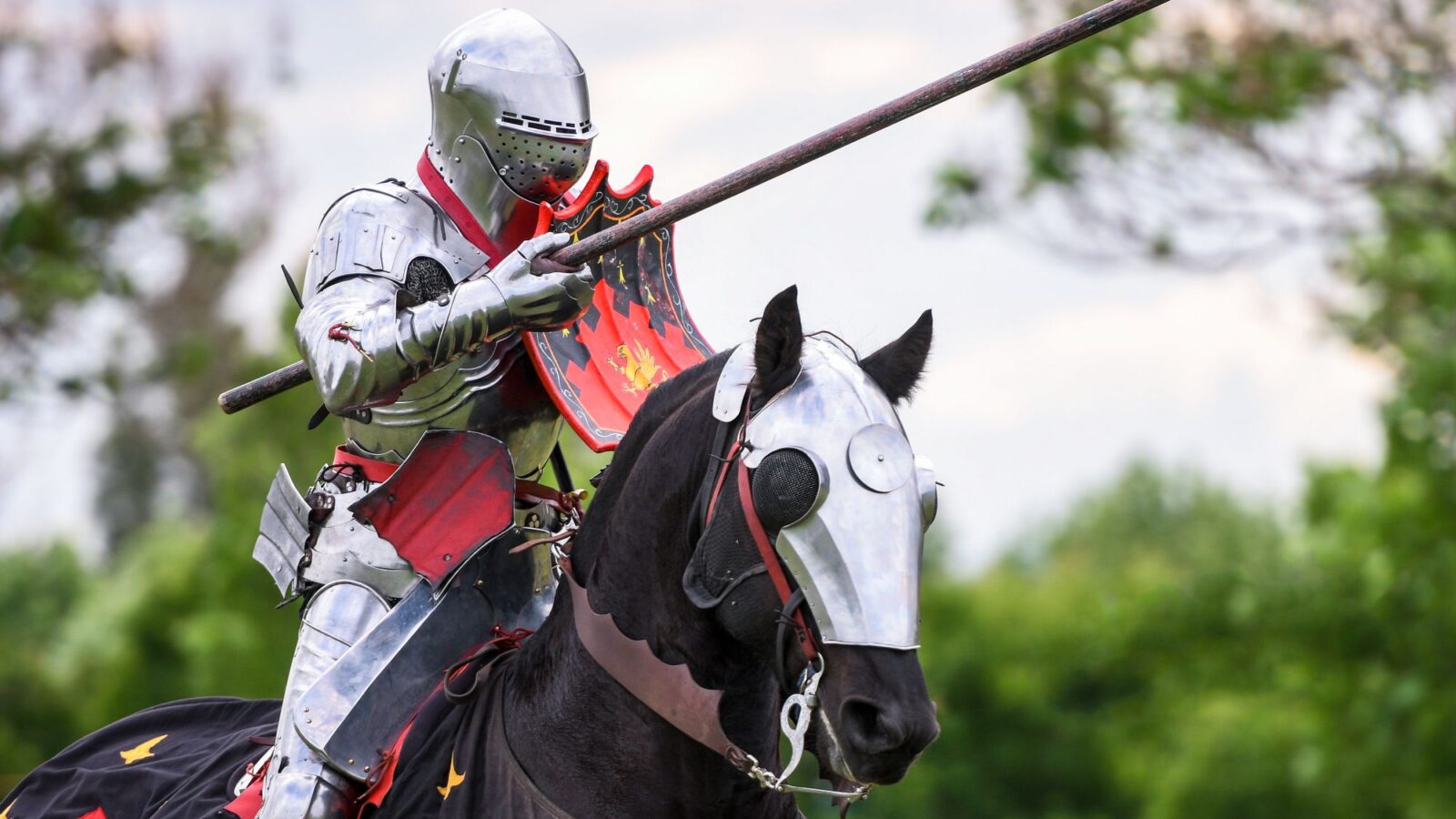
If you’re a solopreneur, like me, you might describe yourself as a freelancer. And yes, that also goes back to mediaeval Europe. Under the feudal system, most knights were under obligation to fight for someone above them, when they were called on. This might be a king, a duke or a powerful baron — and the way it was expressed was that their lance was pledged to that overlord, since the lance was the weapon that most characterised a knight.
Some knights, though, had no such obligations and were free to fight for whoever paid them. Therefore their lance was free, and they were described as a freelance — a fancy name for a mercenary.
The “lance” didn’t just refer to the knight’s weapon, though. It was also the term used for the small squad the knight brought with him, typically consisting of his squire and a handful of foot soldiers. The second-in-command was a corporal, but considered of lower rank than a regular corporal and consequently known as a lance corporal — another term that’s survived.
So those are just two examples of how aspects of modern business we take for granted actually go back centuries. As it’s said, there’s nothing new under the sun — well, apart from Zoom, perhaps.

Nick Blatchley
Copywriter and author, known as the Word Wizard, based in Hertfordshire. I’ve been writing since the age of four and writing for businesses since 2014: websites, blogs, books and social media, all in my clients’ own voices.